Base Yourself Where the Metro Is Boring and Reliable
For a slow week, the single most useful decision is the hotel's position relative to the Yellow Line. Rooms around Connaught Place and Janpath put you ten minutes' walk from Rajiv Chowk interchange, where the Yellow and Blue lines meet, and a short auto ride from the tree-shaded bungalow streets of Lutyens' Delhi. Mid-range rooms in this belt are typically quoted somewhere in the middle of the city's range, well below the five-star properties along Mansingh Road. The trade-off is noise: Janpath rooms facing the market run loud until late, so ask for a courtyard or rear-facing room when you book.
The alternative is leafy, quieter and less convenient: the guesthouses of Nizamuddin East and Jangpura, near Humayun's Tomb, where mornings begin with parakeets rather than horns. From there, the Jangpura metro station on the Violet Line is a five to ten minute walk, and you can reach Khan Market or the Central Secretariat in a couple of stops. I would book Nizamuddin for a week-long stay and Connaught Place for anything under four nights; the quieter base rewards the slower traveller, but only if you are not changing hotels mid-trip.
A Week That Leaves Room for Tea
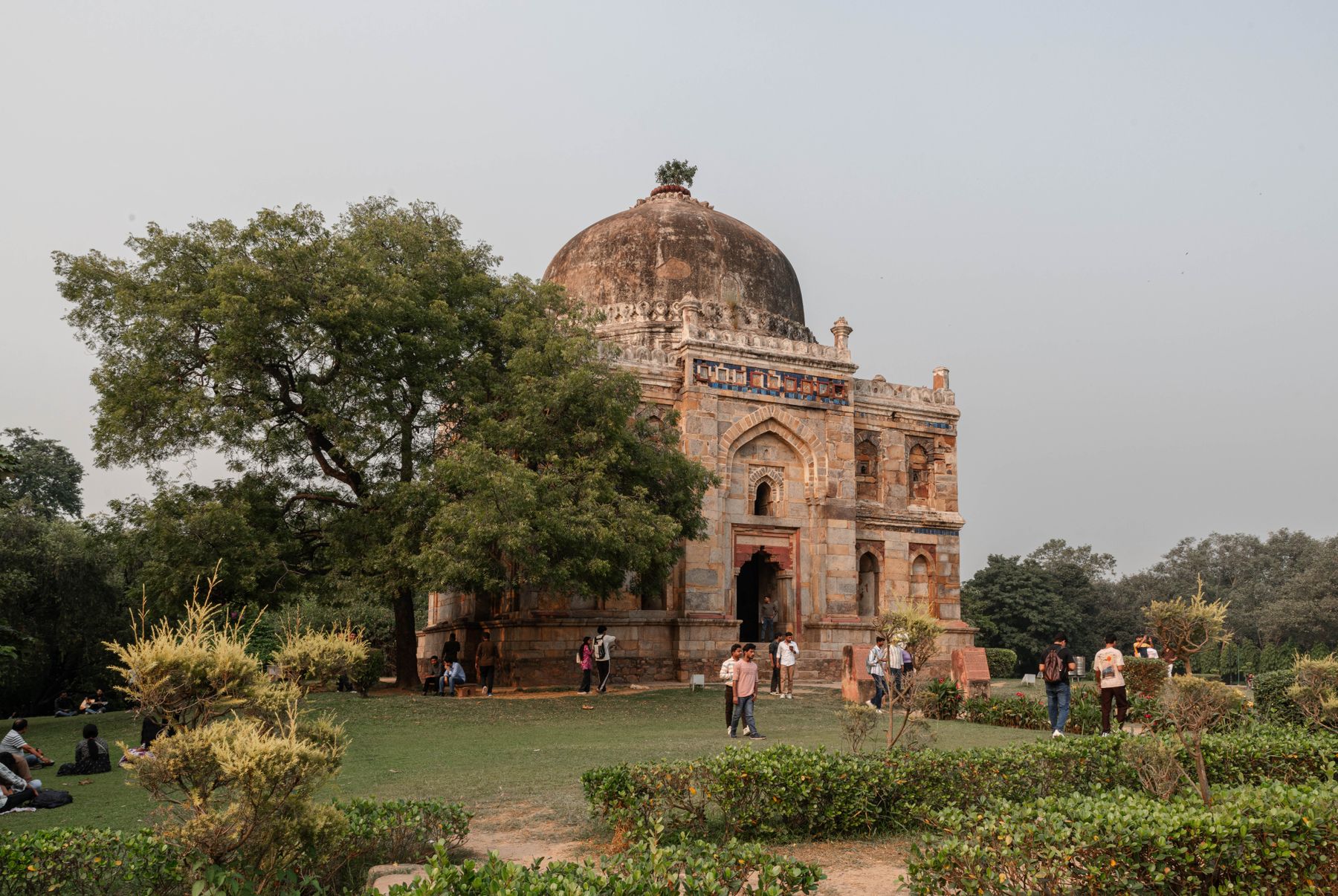
Build the week around two or three anchors and let the rest float. Morning one: Humayun's Tomb and the adjoining Sunder Nursery, which together eat four unhurried hours. The nursery has benches, shade and a small cafe; go on a weekday, arrive at opening, and you will have the Mughal garden walkways largely to yourself. Afternoon: rest. Evening: walk the Lodhi Garden circuit, roughly 90 acres, where the Athpula bridge and the Sayyid and Lodi tombs sit among joggers and picnicking families. The garden is free, open from early morning until around sunset, and best in the cool months from November to February, when Delhi's daytime temperatures sit in the comfortable twenties.
Give Old Delhi a full day and no more. Start at the Red Fort at opening, walk the length of Chandni Chowk to the Fatehpuri Masjid end, and stop in the spice lanes off Khari Baoli, where the crowds thicken past mid-morning. Do not attempt Old Delhi on a Saturday or during the festive season unless you enjoy density; Tuesdays and Wednesdays are calmer. Skip the cycle-rickshaw loops that tout for custom near the fort's Lahore Gate and simply walk; distances inside the walled city are shorter than they look on a map, and walking lets you stop for chai when the mood takes you.
Museums, Markets and the Long Southern Edge
Set aside a morning for the National Museum on Janpath and another for the Crafts Museum on Bhairon Marg, which has an outdoor village-complex section and a decent canteen. Both are closed on Mondays; the National Museum is otherwise open from mid-morning to late afternoon, and the Crafts Museum charges a modest entry fee. Pair the Crafts Museum with a walk through Pragati Maidan's newer landscaped grounds and the Bharat Mandapam precinct, which has changed the feel of that stretch considerably. For shopping, skip the crush of Palika Bazaar and head to Khan Market or the quieter middle lane of Hauz Khas Village, where bookshops and tailoring still outnumber the bars.
Give one whole day to the southern edge, where Delhi becomes almost rural. The Mehrauli Archaeological Park, next to Qutub Minar but far emptier, holds stepwells, tombs and the ruin of Metcalfe's Folly across roughly 200 acres of scrub and grass. Go in the morning, wear closed shoes, and take water. Afterwards, walk the ten minutes to Qutub Minar or a little further to the garden restaurants of Mehrauli's old village. The drive from Connaught Place is around 45 to 60 minutes depending on traffic; from Nizamuddin, count on 35 to 50. A taxi for the day is the sensible splurge.
The Logistics That Make Slowness Possible
Use the Delhi Metro as your default and the app-based cabs for the last mile. A stored-value metro card pays for itself within a couple of days if you are riding three or four times daily; single-journey tokens are fine for occasional trips. Avoid road travel between roughly 8.30 and 11 in the morning and again from 5.30 in the evening, when the Ring Road and Aurobindo Marg seize up. Autos are metered but often quoted as a flat fare to visitors; agree the amount before you sit down. For a week-long stay, budget for two cab journeys a day rather than a hired car, and you will still come out ahead.
Pick your month deliberately. October and November are warm but clear; December and January bring cold mornings and the city's worst air, so travellers with respiratory sensitivity should reconsider. February to March is the sweet spot: gardens are green, the Lodhi Garden roses are out, and daytime temperatures sit near the mid-twenties. Avoid May and June entirely if you can. Book accommodation two to three weeks ahead for the cool months, and ask the hotel directly about airport pickup, since the airport express line and the Magenta Line connection make the trip into central Delhi straightforward without it.
Hotels in Delhi
Questions, answered
How many days do I need in New Delhi to avoid rushing?
Five to seven days lets you cover Lutyens' Delhi, Old Delhi, the southern monuments and two museums without long days. With fewer than four nights, pick either the central belt around Connaught Place or the quieter Nizamuddin area, not both.
Which neighbourhood should I stay in for a slow week?
Nizamuddin East and Jangpura suit week-long stays: quiet streets, Humayun's Tomb on the doorstep, and the Violet Line metro a short walk away. Connaught Place and Janpath work better for shorter visits because everything central is within reach on foot.
When is the best time to visit New Delhi?
February and March are the most comfortable, with green gardens and daytime temperatures in the mid-twenties. October and November are also good. December and January are cold and hazy, and May and June are best avoided if you plan to walk much.
Doing good is the business: every booking through Stay New Delhi funds one verified tonne of carbon removal — same room, same price, no markup.
Start Your Search