Ajmal Khan Road and the Gaffar Market arcades
Karol Bagh's main spine is Ajmal Khan Road, a kilometre or so of shops running from the Padarath Nagar end down to the Karol Bagh Metro station on the Blue Line. In heavy rain the open stretches flood quickly and traffic backs up badly, so walk it in short hops between the covered stretches near the padarath market and the Gaffar Market arcades. Most shops open around 11am and close by 8pm, and many shut entirely on Mondays. Rain thins the crowds considerably between noon and 4pm, which is the window to aim for.
Gaffar Market, off Ajmal Khan Road, is the wholesale warren for mobile phones, accessories and repairs, and its narrow lanes stay busy even in a downpour. Do not plan on browsing quickly here; it is dense, often wet underfoot and not wheelchair-friendly. If your phone screen cracks on a wet afternoon, this is where it gets fixed within an hour or two, cash or card. Carry a small umbrella rather than a raincoat, since the covered sections are short and you will be in and out constantly.
Museums, books and a long lunch
The National Museum on Janpath, roughly 6km and 25 to 40 minutes by taxi from Karol Bagh depending on traffic, is a solid full-afternoon indoor choice with a cafe and cloakroom. Closer to home, the underground Central Market at Rajiv Chowk is around 5km away via the Blue Line with an interchange at Rajiv Chowk itself, and gives you air-conditioned shops and restaurants while the rain passes. For a quieter option, the bookshops around Khan Market, 8km south, work well if you want a long lunch and browsing rather than sightseeing.
Eat indoors rather than chancing a terrace. Karol Bagh has plenty of mid-range restaurants along Ajmal Khan Road and near the Metro station where a sit-down lunch for two generally lands in the mid-range bracket; budget accordingly and confirm the bill before ordering. Skip the street-food stalls when it is raining hard, not for any dramatic reason but because standing in a downpour with a plate is miserable. Tea and snacks in a covered restaurant will keep you dry and warm at a fraction of the effort.
Getting around without getting soaked
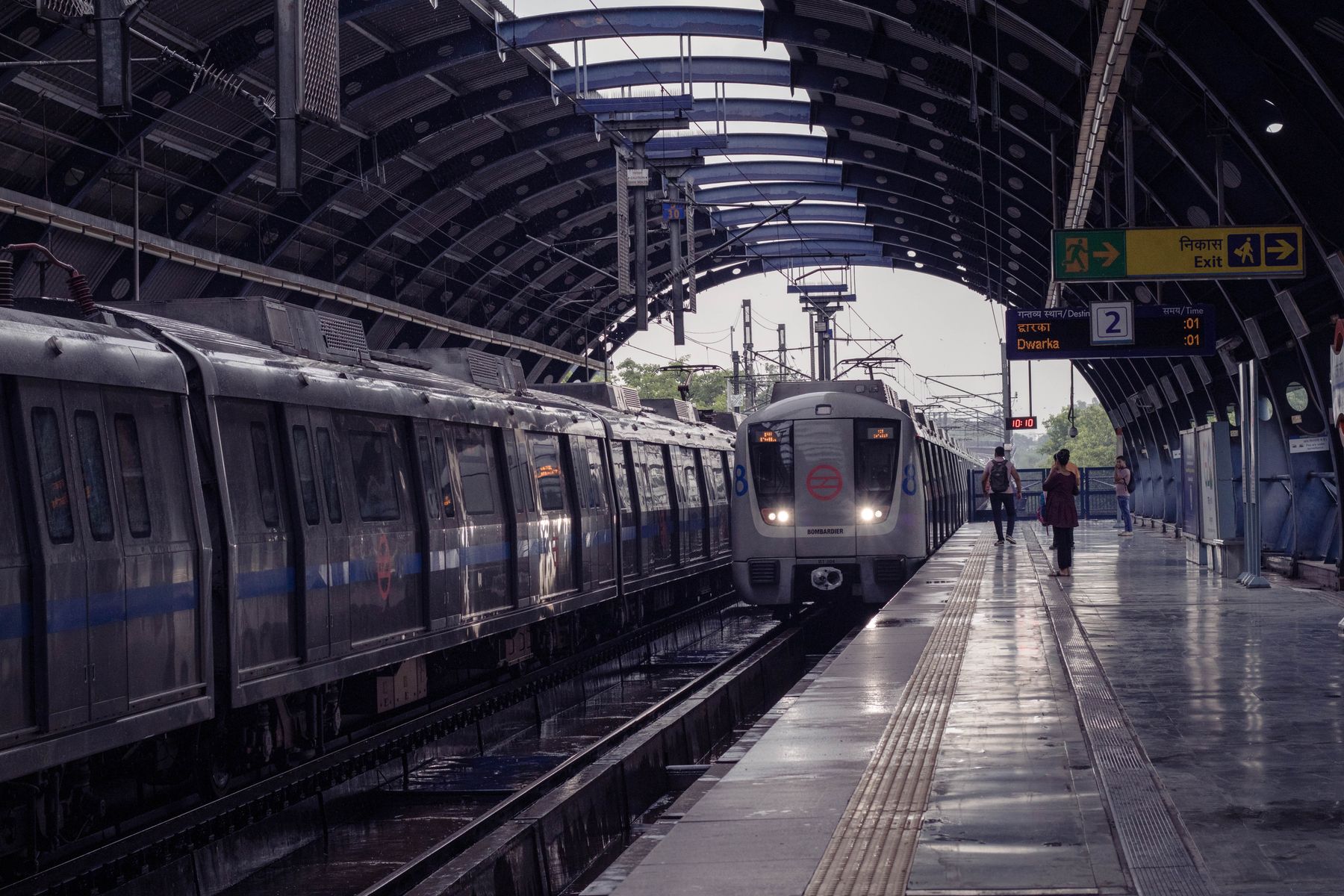
The Blue Line is your friend: Karol Bagh station sits on Ajmal Khan Road and connects directly to Rajiv Chowk and Mandi House without leaving the network. Fares are cheap and the platforms are covered, but the walk from the station exit to your hotel is the wet part, so pick accommodation within a few hundred metres of an exit. Auto-rickshaws are cheap but open-sided; in steady rain, a taxi or app cab is worth the extra spend for the short hops. Allow 30 to 50 minutes for journeys that look like 20 on the map.
Peak monsoon in Delhi runs from late June to early September, with July and August the wettest. Mornings often clear, so schedule outdoor errands early and keep afternoons for indoor stops. Karol Bagh's lanes drain unevenly, and the stretch near the Metro station can hold ankle-deep water, so wear shoes you do not mind ruining and carry a plastic bag for them. Taxis queue on Ajmal Khan Road but may refuse short fares in heavy rain; walking a block to a main road usually solves it.
Where to stay and what to skip
Karol Bagh suits a rainy-day trip better than many Delhi districts because the market, the Metro and the restaurants are all within walking distance. Book a hotel within roughly 500 metres of the Karol Bagh Metro station or the Ajmal Khan Road crossing. Mid-range rooms here sit in the affordable to mid-range band, with the higher end of that range buying reliable hot water and a proper window, which matters when you are spending an afternoon indoors. Check for a lift and generator backup; both are useful in a storm.
Skip the full-day sightseeing plan if the forecast is bad. Red Fort and Humayun's Tomb are mostly outdoor, and Qutub Minar is a wet walk with little shelter. Do not attempt the crowded market lanes at 6pm on a rainy Saturday; it is shoulder-to-shoulder. If you want one out-of-town note, the drive to Gurugram's malls takes an hour or more in rain and is rarely worth it from Karol Bagh. I would book Karol Bagh itself and stay local.
Hotels in Karol Bagh
Questions, answered
Is Karol Bagh safe to walk around during heavy rain?
Broadly yes, but watch for open drains and ankle-deep water near the Metro station and along the Ajmal Khan Road crossing. Stay on the higher pavement, avoid flooded stretches and keep your phone and wallet somewhere dry and secure. Traffic moves slowly and unpredictably in the rain, so cross only at busy junctions.
How do I get from Karol Bagh to central Delhi on a wet day?
Take the Blue Line from Karol Bagh station to Rajiv Chowk, about 15 to 20 minutes, and stay underground. It is the driest and most predictable option in monsoon traffic. Autos are cheaper but open-sided; app cabs take 30 to 50 minutes for short hops when it rains hard.
What should I pack for a monsoon visit to Karol Bagh?
A compact umbrella, quick-drying shoes you do not mind spoiling, a plastic bag for wet footwear and a light layer for air-conditioned shops. Add a power bank, since long afternoons indoors drain phones. Avoid leather bags and anything that soaks through quickly; the market lanes hold water for hours after rain stops.
Which months are wettest in Delhi?
Late June through early September, with July and August wettest. Storms usually arrive in the afternoon or evening, so mornings are your best bet for errands and outdoor plans. Keep the afternoon flexible and have an indoor backup, ideally near your hotel rather than across the city.
Do Karol Bagh shops close when it rains?
Most stay open, though some shut early in very heavy rain and many close entirely on Mondays. Plan shopping between noon and 4pm when crowds thin. Gaffar Market's wholesale lanes and the covered stretches near Ajmal Khan Road are the most reliable bets when it is pouring.
Where can I eat indoors near Ajmal Khan Road?
There are mid-range sit-down restaurants along Ajmal Khan Road and around the Metro station, and the Central Market at Rajiv Chowk if you take the Blue Line. Book a table or arrive early for lunch. Confirm prices before ordering, and skip street stalls when it is raining hard.
Should I stay in Karol Bagh or somewhere closer to central Delhi?
Karol Bagh works well if you want the market, Metro and restaurants within walking distance, and it is generally cheaper than central Delhi. Pick a hotel within 500 metres of the Metro station. If sightseeing is your priority, Connaught Place cuts travel time, but Karol Bagh is better value on a rainy trip.
Are there indoor things to do for children in Karol Bagh?
The covered market stretches and Central Market at Rajiv Chowk work for a few hours, and the National Museum on Janpath has space to move indoors. Plan short outings with a taxi between stops rather than long walks. Carry snacks and water, since waiting out a storm indoors can stretch longer than expected.
Doing good is the business: every booking through Stay New Delhi funds one verified tonne of carbon removal — same room, same price, no markup.
Start Your Search